In today’s hyper-connected world, billions of devices generate massive amounts of data every second. From smart homes to large-scale manufacturing plants, the Internet of Things (IoT) is transforming how we live and work. However, as data volumes grow, relying solely on centralized cloud systems is no longer efficient. This is where iot edge computing comes into play.
IoT edge computing is reshaping how data is processed, analyzed, and acted upon bringing intelligence closer to where it’s needed most. In this blog, we’ll explore what IoT computing, its key benefits, real-world applications, and what the future holds.
What is IoT Edge Computing?
In simple terms, IoT edge computing refers to processing data closer to the source of generation such as sensors, machines, or local devices—instead of sending it all to a centralized cloud server.
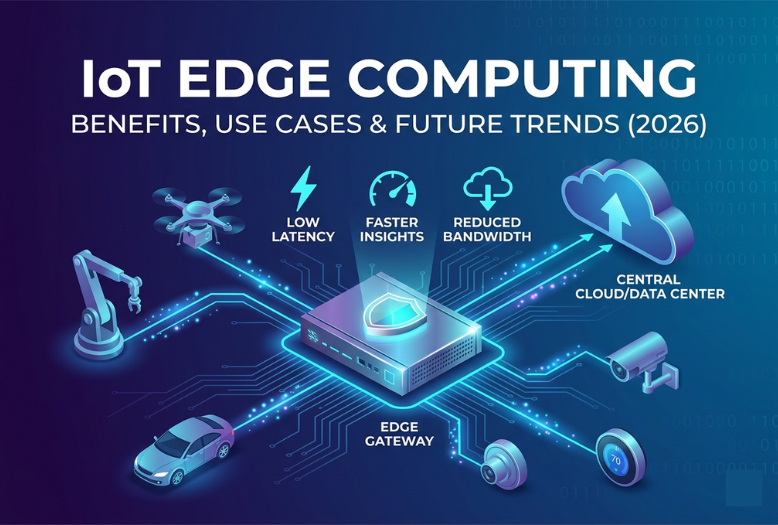
Traditionally, IoT systems relied on cloud computing for data analysis. While effective, this model introduces latency, bandwidth constraints, and potential security risks. Edge computing solves these issues by enabling real-time data processing at or near the device level.
For example, in iot device monitoring, edge systems can instantly detect anomalies in machinery without waiting for cloud analysis. This leads to faster decision-making and improved operational efficiency.
Why IoT Edge Computing Matters
- As industries adopt IoT at scale, the limitations of cloud-only systems become evident. IoT addresses these challenges by:
- Reducing latency for real-time responses
- Minimizing bandwidth usage
- Enhancing data security
- Ensuring uninterrupted operations even with limited connectivity
These advantages make it especially critical in environments like healthcare, manufacturing, and smart cities, where every second counts.
Key Benefits of IoT Edge Computing
1. Real-Time Data Processing
One of the biggest advantages of IoT edge computing is its ability to process data instantly. For example, this is crucial in scenarios like predictive maintenance or autonomous systems, where delays can lead to costly failures.
In iot monitoring, real-time insights allow businesses to act immediately, preventing downtime and improving performance.
2. Reduced Latency
By processing data locally, edge computing eliminates the need to send information back and forth to the cloud. This significantly reduces latency, making it ideal for time-sensitive applications such as:
- Industrial robotics
- Autonomous vehicles
- Smart traffic systems
3. Improved Bandwidth Efficiency
Moreover, sending large volumes of raw data to the cloud can strain network resources. As a result, IoT edge computing filters and processes data locally, transmitting only relevant information.
This is especially useful in industrial iot, where thousands of sensors continuously generate data.
4. Enhanced Security and Privacy
With edge computing, sensitive data can be processed locally rather than being transmitted over networks. This reduces exposure to cyber threats and ensures better data privacy.
For industries dealing with confidential information, such as healthcare or finance, this is a major advantage.
5. Reliability and Offline Functionality
Edge systems can operate even when internet connectivity is limited or unavailable. This ensures uninterrupted operations in remote or critical environments.
For example, in industrial automation in iot, production lines can continue functioning smoothly without relying entirely on cloud connectivity.
Use Cases of IoT Edge Computing
1. Industrial IoT and Smart Manufacturing
IoT computing plays a vital role in industrial iot by enabling smarter and more efficient manufacturing processes.
Factories use edge devices to monitor equipment performance, detect faults, and optimize production. This enhances iot industrial automation by ensuring machines operate at peak efficiency with minimal downtime.
2. Predictive Maintenance
Instead of reacting to equipment failures, businesses can predict them using real-time data analysis.
Edge computing enables continuous iot device monitoring, identifying patterns that indicate potential issues. This helps companies:
- Reduce maintenance costs
- Avoid unexpected breakdowns
- Extend equipment lifespan
3. Smart Cities
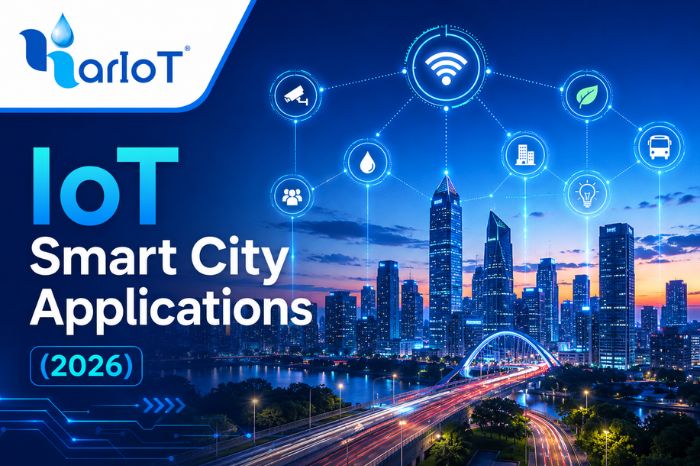
For example, from traffic management to waste collection, smart cities rely heavily on IoT systems.
With IoT , data from sensors such as traffic signals or surveillance cameras can be processed locally. This allows for faster decision-making, such as adjusting traffic flow in real time.
4. Healthcare and Remote Monitoring
In healthcare, real-time data processing can save lives. For instance, wearable devices and medical sensors use edge computing to monitor patient vitals and alert healthcare providers instantly.
In turn, this form of IoT monitoring ensures timely interventions and enhances overall patient outcomes
5. Energy and Utilities
For instance, energy companies use IoT edge computing to monitor grids, detect faults, and optimize energy distribution.
In such cases, edge devices enable continuous monitoring in remote locations without the need for constant cloud connectivity.
6. Retail and Customer Experience
Retailers use IoT edge computing to analyze customer behavior in real time. As a result, technologies like smart shelves and personalized offers help enhance the shopping experience.
IoT Edge Computing vs Cloud Computing
While both edge and cloud computing play important roles, they serve different purposes.
| Feature | Edge Computing | Cloud Computing |
| Data Processing | Local (near device) | Centralized |
| Latency | Very Low | Higher |
| Bandwidth Usage | Optimized | High |
| Connectivity | Can work offline | Requires internet |
| Use Cases | Real-time applications | Data storage & analytics |
In most cases, a hybrid approach works best, where edge computing handles real-time processing, while the cloud manages long-term storage and deeper analytics.
Challenges of IoT Edge Computing
Despite its advantages, IoT edge computing comes with its own set of challenges:
1. Device Management
Managing a large number of edge devices can be complex. Businesses need efficient systems for iot device monitoring and maintenance.
2. Security Concerns
While edge computing improves data privacy, distributed devices can still be vulnerable if not properly secured.
3. Infrastructure Costs
At the same time, implementing edge infrastructure involves upfront costs for hardware and software.
4. Integration Complexity
However, integrating edge computing with existing IoT systems and cloud platforms can be challenging.
Future Trends in IoT Edge Computing (2026 and Beyond)
Looking ahead, the future of IoT computing appears highly promising, as rapid advancements continue to shape the next generation of smart systems.
1. AI-Powered Edge Computing
Moreover, artificial intelligence is increasingly being integrated with edge devices, enabling smarter and faster decision-making without relying on the cloud.
2. 5G Integration
The rollout of 5G networks will further enhance IoT computing by providing faster connectivity and lower latency.
3. Growth of Industrial Automation
As industries continue to adopt automation, industrial automation in iot will become more sophisticated, with edge computing playing a central role.
4. Enhanced IoT Monitoring Systems
Furthermore, advanced IoT monitoring solutions will leverage edge computing to deliver real-time insights with greater accuracy and efficiency.
5. Expansion of Smart Ecosystems
Ultimately, from smart homes to smart cities, IoT computing will drive the growth of seamlessly interconnected ecosystems.
Conclusion
IoT computing is no longer just an emerging trend it’s a necessity in today’s data-driven world. By bringing computation closer to the source, it enables faster processing, improved efficiency, and enhanced security.
From industrial iot to healthcare and smart cities, the applications of edge computing are vast and transformative. As technologies like AI and 5G continue to evolve, the role of iot edge will only become more significant.
As a result, businesses that adopt this technology early will gain a competitive advantage by delivering smarter, faster, and more reliable solutions.