
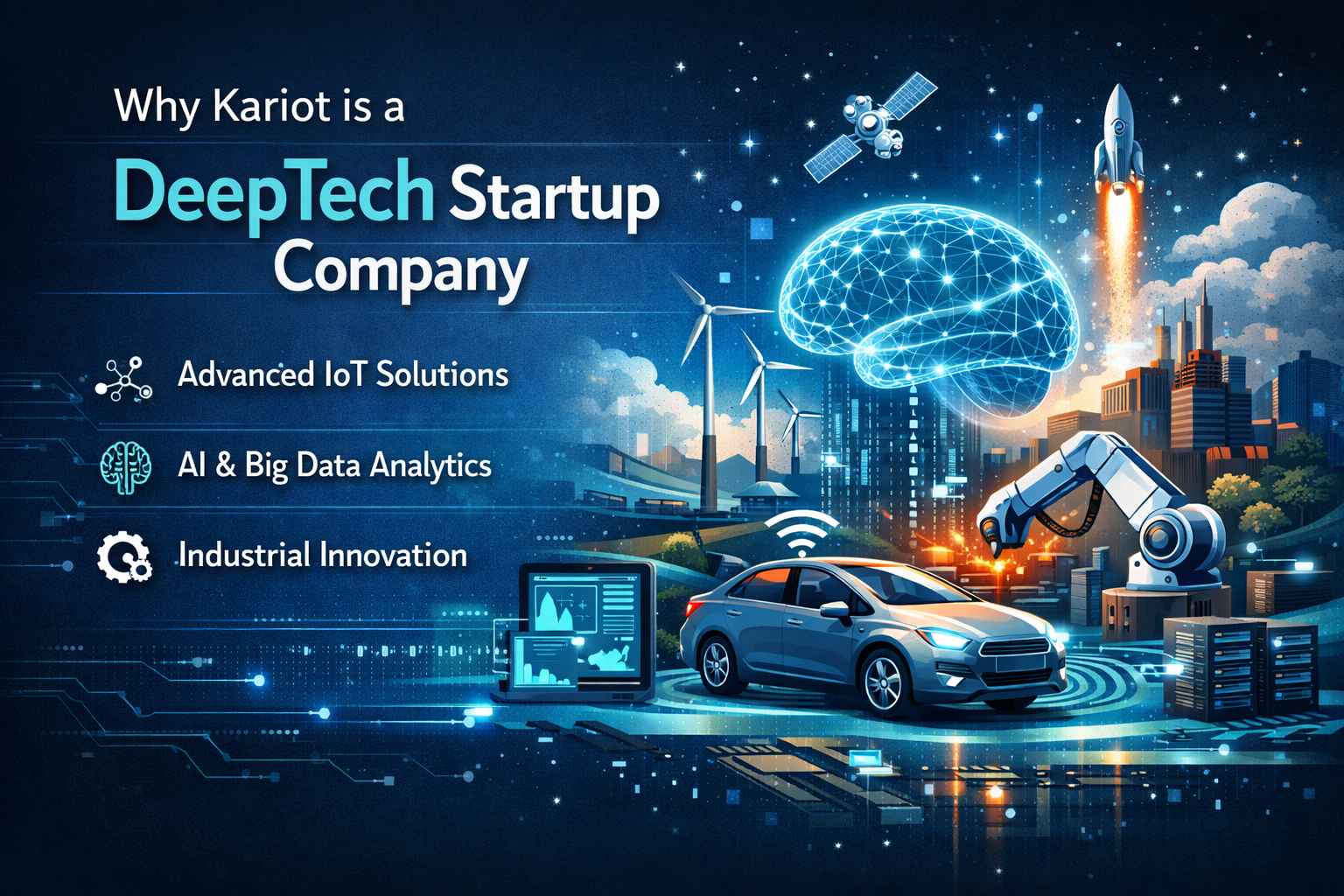
Smart Water Management absolutely qualifies as a Deep Tech startup. The classification comes not from marketing language, but from the depth of engineering, scientific rigor, and infrastructure impact behind the solution. Based on evaluation frameworks like those used by Karnataka ELEVATE, the solution strongly fits into the Deep Tech category because it goes beyond software dashboards and delivers core technological innovation that interacts directly with physical infrastructure.
Understanding how evaluators think is critical. They typically look for technological depth, proprietary innovation, real-world deployment, and the ability to solve complex infrastructure challenges. When framed correctly, the solution demonstrates all of these characteristics
Deep Tech
Deep Tech is not simply about building software products, SaaS platforms, or mobile applications. It refers to solutions grounded in advanced engineering or scientific innovation that solve complex real-world problems. These technologies often require significant research, experimentation, and domain expertise.
A startup is considered Deep Tech when it involves the following elements.
Core Engineering or Scientific Innovation
Deep Tech solutions must be built on strong technical foundations rather than surface-level software layers. This includes the integration of hardware, electronics, and intelligent systems that interact with the physical world.
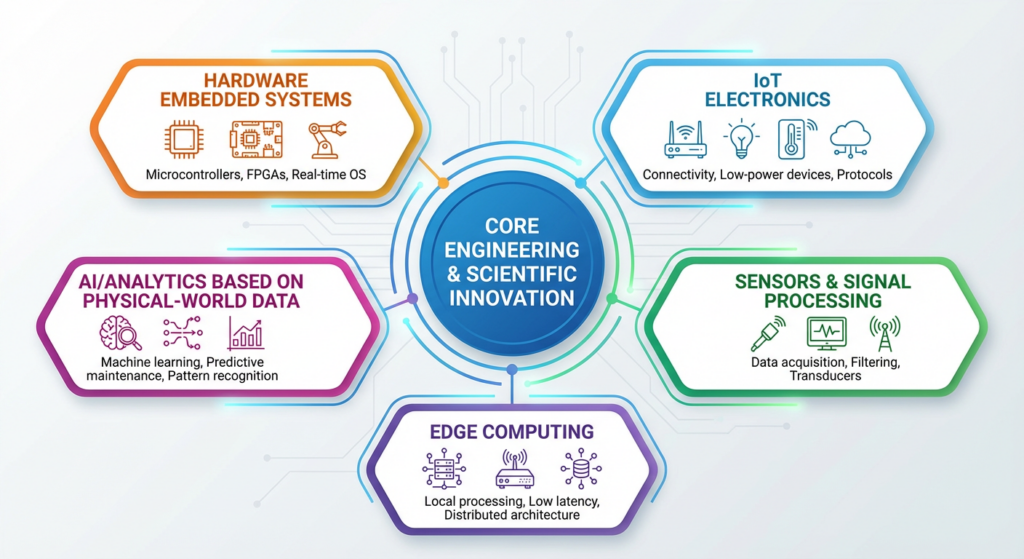
Hardware + embedded systems
The solution incorporates purpose-built hardware components designed specifically for water infrastructure environments. Unlike generic devices, embedded systems are engineered to operate reliably in harsh field conditions such as underground chambers, high humidity, and variable power availability. This demonstrates engineering depth and a clear focus on solving real operational challenges.
IoT electronics
IoT electronics form the backbone of the system, enabling continuous data capture from distributed water assets. These electronics are optimized for low power consumption and long-term deployment, ensuring uninterrupted monitoring across large networks. Designing such electronics requires expertise in circuit design, communication protocols, and environmental durability.
Sensors & signal processing
Accurate measurement of water flow, pressure, and tank levels relies on sophisticated sensor integration. Signal processing algorithms filter noise, calibrate readings, and ensure data accuracy. This capability moves the solution beyond simple data collection into intelligent interpretation of physical signals.
Edge computing
Processing data at the edge reduces latency and improves reliability, especially in areas with intermittent connectivity. Edge logic enables local decision-making, such as anomaly detection or data buffering, ensuring continuous operation even when cloud connectivity is limited.
AI/analytics based on physical-world data
Analytics models transform raw telemetry into actionable insights. By analyzing consumption patterns, leakage indicators, and supply trends, the system supports smarter operational decisions. Working with physical-world data introduces complexity due to variability and uncertainty, reinforcing the Deep Tech nature of the platform.
Proprietary Technology Development
A defining characteristic of Deep Tech is the creation of original technology rather than simply integrating existing tools.
Custom-built hardware
The hardware architecture is designed in-house to meet specific requirements of water utilities. Custom engineering allows optimization for durability, communication range, and power efficiency, ensuring the system performs reliably in real deployments.
Own firmware
Firmware controls device behavior, data acquisition cycles, and communication routines. Moreover, developing proprietary firmware provides full control over performance tuning, security, and feature evolution. As a result, this approach distinguishes the solution from off-the-shelf alternatives, while also enabling continuous optimization and long-term scalability
Own communication architecture
A tailored communication framework ensures efficient data transfer across distributed assets. Designing this architecture requires deep understanding of network topology, interference management, and scalability considerations.
Novel engineering approach
The overall system introduces innovative methods for monitoring legacy infrastructure without requiring extensive modifications. This demonstrates creativity in solving real-world constraints, a hallmark of Deep Tech innovation.
3 Solving Infrastructure / Industrial Problems
Deep Tech solutions typically address large-scale challenges affecting public systems and industries.
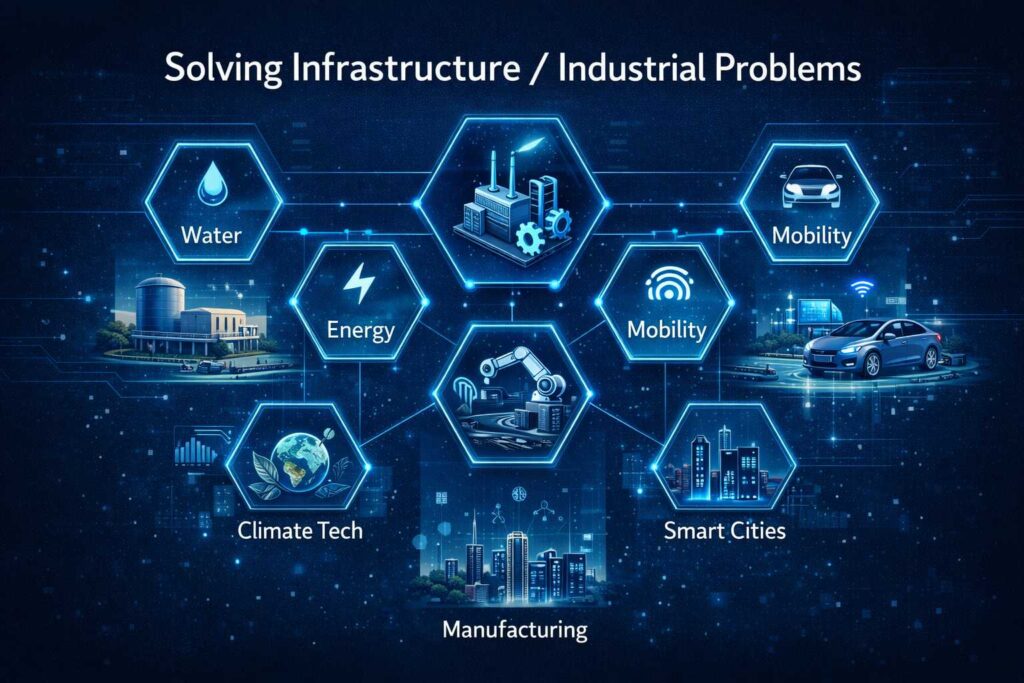
Water
Water management is a critical global challenge involving distribution efficiency, leakage reduction, and equitable supply. Monitoring water networks requires robust technology capable of operating across geographically dispersed assets.
Energy
Optimized water operations indirectly reduce energy consumption by improving pumping efficiency and reducing waste. In addition, efficient monitoring helps utilities minimize unnecessary energy usage. Consequently, this leads to lower operational costs and supports more sustainable resource management.
Mobility
Reliable water infrastructure supports urban mobility by ensuring uninterrupted service to residential and industrial areas, thereby enabling cities to function smoothly. Furthermore, consistent water availability strengthens essential services and supports overall urban efficiency.
Climate tech
Reducing water loss contributes to climate resilience by conserving natural resources and supporting sustainable urban development.
Manufacturing
Water is a key input in many industrial processes. Improved monitoring ensures reliable supply and supports operational continuity.
Smart cities
Digital water infrastructure is a foundational element of smart city initiatives, enabling data-driven governance and improved service delivery.
4 High R&D Intensity
Deep Tech development requires sustained research efforts and iterative testing.
Requires experimentation
Developing reliable telemetry systems involves multiple design iterations, field trials, and performance tuning. Through continuous experimentation, the technology is validated to perform under real conditions. As a result, the system achieves higher reliability and operational robustness
Field deployment validation
Deployments across operational networks validate system robustness and scalability. Field validation is essential for proving reliability beyond controlled environments.
Engineering complexity
Integrating hardware, firmware, networking, and analytics introduces significant complexity. Managing this complexity requires multidisciplinary expertise.
Long development cycles
Infrastructure technologies often take years to mature due to testing, regulatory considerations, and operational integration. This long horizon reflects genuine technological depth.
Why the Solution Clearly Fits Deep Tech
The platform aligns strongly with Deep Tech characteristics due to its engineering foundation, infrastructure focus, and operational impact.
Custom Hardware Development
The development of specialized devices such as gateways, repeaters, and sensor interfaces demonstrates ownership of core technology. Building these components from scratch ensures they meet specific operational requirements and reinforces the platform’s technological credibility.
Infrastructure Technology (Government Water Networks)
Monitoring hundreds of distribution systems and analyzing large volumes of water data positions the solution as critical infrastructure technology. This is not merely a visualization tool; it actively supports essential public services.
Tracking parameters like flow rates, supply levels, and usage patterns enables utilities to optimize operations and respond proactively to issues, improving service reliability.
Replacement of Traditional SCADA
Traditional SCADA systems are often expensive and difficult to deploy across legacy networks. Introducing a retrofit IoT layer that enhances existing infrastructure without requiring replacement represents a significant engineering advancement.
This approach reduces costs, accelerates deployment, and extends the lifespan of existing assets while providing modern monitoring capabilities.
Proprietary Communication Architecture
Long-range communication frameworks enable reliable connectivity across wide geographic areas. Designing such systems requires deep understanding of radio behavior, network resilience, and power management. This capability ensures continuous data flow from remote assets, enabling real-time monitoring and analytics.
Real-world Deployment Scale
Operating across large networks and processing vast amounts of data demonstrates maturity and reliability. Real deployments validate the technology’s effectiveness and prove its ability to deliver measurable impact.
Integration with municipal infrastructure further reinforces credibility, showing that the system meets operational standards required for critical services.
Why Some IoT Startups Get Rejected
Many companies position themselves as IoT innovators but lack true technological depth. Simply combining development boards with cloud dashboards does not constitute Deep Tech.
Using off-the-shelf hardware without proprietary innovation or focusing solely on software layers often results in solutions classified as system integration rather than technological innovation.
To avoid this perception, it is essential to highlight original engineering contributions and the complexity of the solution.
What Must Be Clearly Demonstrated
| Aspect | Technical Focus | Key Components | Validation Method |
| Designed hardware in-house | Custom electronics and system design | PCB, sensors, power systems, enclosure | Bench testing, field trials |
| Firmware + communication stack | Embedded software and protocols | RTOS, device drivers, network stack | Performance testing, reliability metrics |
| Engineering novelty | Unique system architecture | Algorithms, signal processing, optimization | Benchmarking, simulations |
| Infrastructure transformation | Operational improvements | Monitoring, automation, analytics | Field data, system KPIs |
To reinforce Deep Tech positioning, the following aspects should be emphasized.
Designed hardware in-house
Demonstrating ownership of hardware design shows commitment to innovation and technical capability.
Firmware + communication stack
Highlighting proprietary software layers underscores control over system performance and evolution.
Engineering novelty
Showcasing unique approaches to solving infrastructure challenges differentiates the solution from competitors.
Infrastructure transformation
Emphasizing real-world impact communicates the broader significance of the technology.
How the Solution Should Be Positioned
Messaging plays a critical role in how evaluators perceive the technology.
Avoid describing the platform as merely a monitoring dashboard or generic IoT solution. Instead, present it as an infrastructure-grade technology that enhances legacy systems through advanced telemetry and engineering innovation.
This framing communicates depth, impact, and long-term value.
Exact Deep Tech Justification
The justification for Deep Tech classification should revolve around four key pillars.
| Dimension | Deep Tech Companies | Typical (App / SaaS / Service) Startups | What This Shows |
| R&D intensity | ~14%+ of revenue (often higher in early stage) | ~5–10% typical | Deep Tech invests more in core technology |
| Early-stage R&D spend | 20%+ or even majority of expenses | Often limited to product iterations | Deep Tech prioritizes research over growth |
| Venture-backed startups with ≥10% R&D | ~65% | Lower share historically | Innovation is central to startup success |
| Time to market | 5–10 years | 1–3 years | Deep Tech requires long validation cycles |
| Patent portfolio | 8–12 core patents avg | 0–2 typical | Strong IP moat in Deep Tech |
| Development focus | Scientific breakthroughs, infrastructure | Customer acquisition, feature speed | Different innovation models |
Innovation
The platform introduces retrofit technology that modernizes existing water infrastructure without requiring costly replacements. This approach reduces barriers to adoption and accelerates digital transformation.
Engineering Depth
Embedded systems, firmware development, and communication optimization demonstrate strong technical foundations. Additionally, field calibration techniques ensure accurate measurements across varying conditions, thereby enhancing reliability and overall system performance.
Scientific Complexity
Monitoring water networks involves understanding hydraulic behavior, integrating multiple sensor inputs, and ensuring data reliability. Furthermore, advanced algorithms interpret this data to generate meaningful insights. Consequently, utilities can make informed decisions and improve operational efficiency.
Impact
The technology contributes to climate resilience by reducing water loss, supports efficient resource management, and enables data-driven urban planning. These outcomes highlight the broader societal value of the solution.
Important Rule — Anonymized Presentation
When preparing materials for evaluators, it is essential to describe the technology in neutral terms without referencing company names or founders. This ensures compliance with evaluation guidelines and keeps the focus on technological merit.
Using phrases like “the startup has developed an indigenous telemetry architecture” maintains professionalism and aligns with review standards.
Future Roadmap and Technological Evolution
As infrastructure challenges continue to grow due to rapid urbanization and climate variability, the role of advanced water monitoring systems will become even more critical. The platform is designed not only to address current operational inefficiencies but also to evolve alongside emerging technological and environmental demands.
Future enhancements will focus on expanding predictive capabilities through advanced analytics and machine learning models. By leveraging historical consumption patterns and real-time telemetry, the system can forecast demand fluctuations, identify potential infrastructure stress points, and recommend proactive maintenance strategies. This shift from reactive monitoring to predictive intelligence represents a major step toward autonomous infrastructure management.
Another key area of evolution is deeper integration with smart city ecosystems. As municipalities adopt digital governance frameworks, interoperability with other urban systems such as energy grids, traffic management, and environmental monitoring will create a unified data layer. This integration enables cross-domain insights, allowing city administrators to make more informed decisions that improve resource efficiency and service delivery.
The platform also aims to enhance edge intelligence by enabling devices to perform more sophisticated processing locally. Advanced edge algorithms can detect anomalies such as sudden pressure drops or unusual consumption patterns in real time, triggering alerts without relying solely on cloud processing. This improves responsiveness and ensures operational continuity even in low-connectivity environments.
Cybersecurity will remain a priority as critical infrastructure becomes increasingly digitized. Strengthening encryption protocols, implementing secure device authentication, and ensuring robust firmware update mechanisms will protect data integrity and maintain system resilience against evolving threats.
Long-Term Impact on Water Sustainability
Beyond operational efficiency, the broader impact of the technology lies in its contribution to sustainable water management. Accurate monitoring and analytics empower utilities to reduce non-revenue water, optimize distribution schedules, and ensure equitable supply across communities. Over time, these improvements can significantly enhance water conservation efforts and support long-term environmental goals.
By enabling data-driven planning, the platform supports policymakers in making informed investments in infrastructure upgrades and expansion projects. Insights derived from continuous monitoring help identify areas with chronic supply issues, guiding targeted interventions that maximize impact while minimizing costs.
Furthermore, the adoption of intelligent water management systems fosters greater transparency and accountability. Stakeholders can access reliable data on system performance, enabling better governance and building public trust. As climate challenges intensify, such transparency becomes essential for ensuring resilient and adaptive infrastructure.
Strengthening the Deep Tech Narrative
Ultimately, the combination of advanced engineering, scientific rigor, and real-world deployment reinforces the platform’s identity as a true Deep Tech innovation. Its ability to bridge legacy infrastructure with modern digital technologies demonstrates a practical pathway for large-scale transformation without disruptive overhauls.
As the technology continues to mature, it will play a pivotal role in shaping the future of urban infrastructure by enabling smarter resource management, improving operational efficiency, and supporting sustainable development initiatives.
Operational Excellence Through Data-Driven Decision Making
| Data Capability | What It Enables | Operational Benefit | Example Use Case |
| Real-time monitoring | Continuous visibility into system performance | Faster issue detection and response | Detecting leaks or abnormal consumption patterns |
| Predictive analytics | Forecasting failures and demand trends | Reduced downtime and proactive maintenance | Predicting pipeline failures before breakdown |
| Automated alerts | Instant notifications on anomalies | Improved operational efficiency | Alerts for pressure drops or sensor faults |
| Performance dashboards | Centralized insights and reporting | Better decision making and accountability | Monitoring KPIs across water networks |
| Data integration | Unified view across systems | Improved coordination and planning | Integrating SCADA, IoT, and asset data |
| Historical analysis | Trend identification and optimization | Long-term efficiency improvements | Seasonal demand analysis and planning |
One of the most transformative aspects of deploying advanced water monitoring technology is the shift it enables from intuition-based operations to data-driven decision making. Traditionally, water utilities have relied heavily on manual inspections, periodic reporting, and reactive maintenance approaches. This often results in delayed responses to issues such as leakages, supply imbalances, or equipment failures.
With continuous telemetry and real-time analytics, operators gain a comprehensive view of network performance at all times. Dashboards and automated alerts allow teams to quickly identify anomalies, prioritize interventions, and allocate resources more effectively. This not only improves operational efficiency but also reduces downtime and minimizes service disruptions.
Granular data visibility empowers utilities to optimize pumping schedules based on actual demand patterns, reducing unnecessary energy consumption. It also supports better planning during peak demand periods, ensuring consistent service delivery even under stress conditions. Over time, the accumulation of operational data builds a valuable knowledge base that can inform long-term infrastructure strategies.
Enabling Scalable Infrastructure Modernization
A major challenge faced by utilities is modernizing aging infrastructure without incurring prohibitive costs or causing service interruptions. The ability to retrofit existing systems with intelligent monitoring layers provides a practical pathway to modernization. Instead of replacing entire networks, utilities can incrementally upgrade capabilities while continuing to operate existing assets.
This scalable approach reduces capital expenditure and allows organizations to adopt digital transformation at their own pace. As new monitoring points are added, the network becomes progressively more intelligent, providing deeper insights and greater operational control. The modular architecture ensures that the system can expand seamlessly as infrastructure grows or requirements evolve.
Scalability also extends to geographic expansion. Whether deployed across small municipalities or large metropolitan regions, the platform’s flexible design supports diverse operational contexts. This adaptability is essential for addressing the varied challenges faced by different regions, from water scarcity to rapid urban expansion.
Building Resilient Communities
Reliable water infrastructure is fundamental to public health, economic stability, and overall quality of life. By improving visibility into distribution networks and enabling proactive management, advanced monitoring systems contribute directly to community resilience. Early detection of leaks or supply disruptions helps prevent water shortages and ensures that essential services remain uninterrupted.
In addition, improved resource management supports equitable distribution, ensuring that underserved areas receive consistent supply. This has significant social implications, particularly in regions where water access is a critical concern. By enabling more efficient operations, the technology helps utilities meet growing demand while conserving limited resources.
Driving Continuous Innovation
The journey of technological advancement does not end with deployment. Continuous feedback from field operations provides valuable insights that drive ongoing improvements in hardware design, firmware optimization, and analytics capabilities. Iterative development ensures that the system evolves to address emerging challenges and incorporate new technological advancements.
Collaboration with utilities, policymakers, and industry stakeholders fosters an ecosystem of innovation where best practices can be shared and refined. As new use cases emerge, such as integrating water quality monitoring or supporting advanced conservation programs, the platform can adapt to deliver additional value.
Ultimately, the commitment to continuous innovation ensures that the technology remains relevant and impactful in a rapidly changing landscape. By maintaining a strong focus on research, engineering excellence, and user needs, the platform continues to push the boundaries of what is possible in intelligent infrastructure management.

Conclusion
The solution embodies the core characteristics of a Deep Tech startup through its strong engineering foundation, proprietary technology, infrastructure focus, and measurable real-world impact. By emphasizing innovation, technical depth, and deployment scale, it clearly demonstrates its role in transforming water management through advanced technology.
Positioned correctly, it stands as a compelling example of how Deep Tech can address critical infrastructure challenges while delivering long-term societal benefits.