In 2026, businesses are no longer asking whether they should adopt smart technologies; instead, they are asking how fast they can scale them. Among these innovations, one of the most transformative technologies driving this shift is IoT monitoring.Today, from manufacturing floors and farms to logistics hubs and smart offices, IoT has moved beyond experimentation and, therefore, has now become a competitive necessity.
With rising operational costs, global supply chain challenges, and growing customer expectations, companies need real-time visibility, predictive insights, and automated decision-making. This is exactly where industrial IoT, IoT device monitoring, and industrial automation in IoT step in.
This blog explores what IoT monitoring is, why it matters more than ever in 2026, how remote monitoring works, and why your business cannot afford to ignore it.
What Is IoT Monitoring?
IoT monitoring refers to the continuous tracking, analysis, and management of data generated by connected devices also known as Internet of Things (IoT) devices. These devices collect information such as temperature, pressure, vibration, humidity, location, and performance metrics, then transmit that data to centralized platforms for analysis.
At the heart of IoT is real-time visibility. Businesses can monitor assets, equipment, and environments remotely without needing physical inspections.
industrial environments, monitoring enables factories to track machine health, energy usage, production efficiency, and safety conditions, therefore improving overall operational visibility and control. In agriculture, IoT sensors monitor soil moisture, weather conditions, and crop health to improve yields and reduce waste.
In simple terms, IoT turns physical operations into measurable, actionable digital insights
Why Is IoT Monitoring Important?
In 2026, the importance of IoT monitoring is driven by three major forces: efficiency, resilience, and intelligence. Together, in fact, these factors are reshaping how businesses operate and adapt to changing conditions.Select 68 more words to run Humanizer.
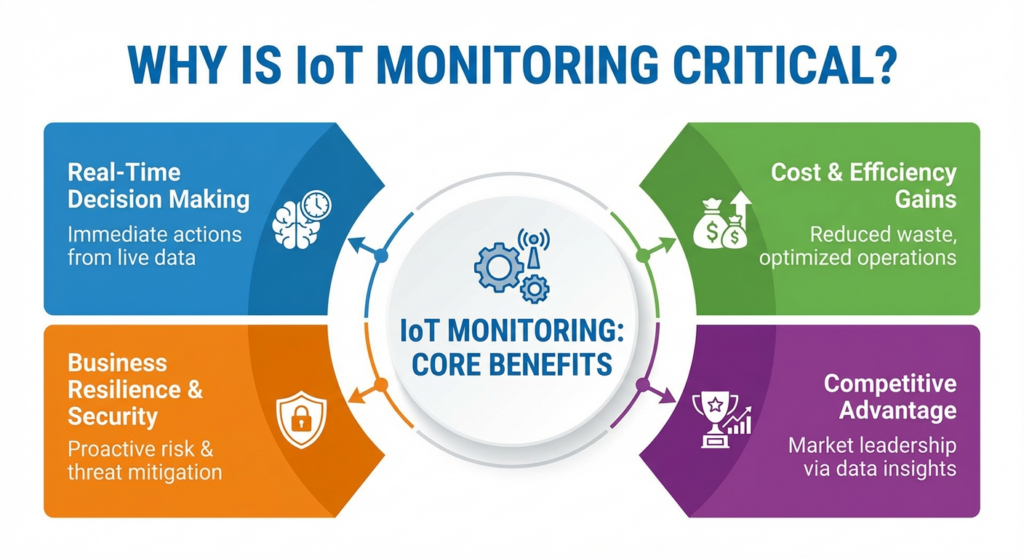
1. Real-Time Decision Making
Traditional data collection methods rely on manual reporting or delayed system updates. In contrast, IoT delivers instant data, allowing businesses to make decisions as events happen, rather than after losses occur..
2. Cost Reduction and Operational Efficiency
Unplanned downtime is one of the biggest financial drains for businesses. With IoT device monitoring, companies can detect early warning signs of failure and perform predictive maintenance instead of costly emergency repairs.
3. Enhanced Business Resilience
Global disruptions have proven that businesses must be agile. As a result, monitoring has become essential. It improves supply chain visibility, enhances equipment reliability, and strengthens workforce safety, thereby helping organizations respond faster to unexpected challenges.
4. Data-Driven Competitive Advantage
Companies using industrial IoT solutions gain access to high-quality operational data. This data fuels analytics, AI models, and automation strategies that competitors without IoT simply cannot match.
How Does IoT Remote Monitoring Work?
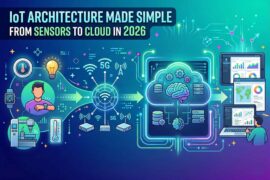
IoT remote monitoring may sound complex, but the process follows a clear and structured flow.
Step 1: Data Collection Through IoT Devices
Sensors and smart devices are typically installed on machines, vehicles, fields, or infrastructure. These devices continuously collect data such as temperature, speed, pressure, fuel levels, or environmental conditions.
Step 2: Data Transmission via IoT Gateway
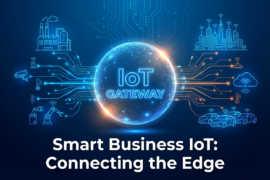
An IoT Gateway acts as the bridge between devices and cloud platforms. It aggregates data and filters unnecessary information. In addition, it ensures security and sends only relevant data to centralized systems through wired or wireless networks. As a result, communication becomes more efficient, secure, and reliable.
Step 3: Cloud Processing and Storage
Once data reaches the cloud, it is stored, processed, and analyzed using advanced analytics and AI algorithms. This step transforms raw data into meaningful insights.
Step 4: Visualization and Alerts
Dashboards display real-time metrics, trends, and reports. Automated alerts notify teams when thresholds are exceeded such as overheating equipment or declining performance.
Step 5: Action and Automation
Based on these insights, businesses can trigger automated actions, schedule maintenance, optimize workflows, or remotely control devices, thereby closing the loop between data and action. As a result, organizations move from simply collecting information to making real-time, intelligent decisions..
Industrial IoT: The Backbone of Smart Businesses
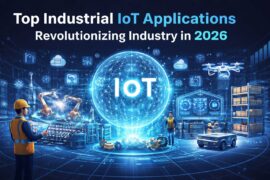
Industrial IoT (IoT) is at the core of modern industrial transformation. Today, in 2026, factories are no longer isolated systems; instead, they are interconnected ecosystems.
Industrial Automation in IoT
Industrial automation in IoT enables machines to communicate with each other without human intervention. As a result, processes become faster, more accurate, and highly efficient. Production lines can self-adjust based on demand, equipment condition, or raw material availability.
This level of automation improves:
- Production efficiency
- Quality control
- Energy optimization
- Worker safety
In this way, by integrating IoT with automation systems, manufacturers gain unprecedented control over operations. As a result, they can monitor performance in real time, reduce downtime, and improve overall productivity.
Your Business Needs IoT Monitoring More Than Ever
1. Predictive Maintenance Instead of Reactive Repairs
IoT device monitoring helps businesses detect anomalies before failures occur. Sensors track vibration, temperature, and usage patterns to predict breakdowns early.
This reduces downtime, extends asset lifespan, and lowers maintenance costs.
2. Improved Asset Tracking and Utilization
IoT monitoring enables real-time tracking of vehicles, tools, and inventory. As a result, businesses can identify underutilized assets, prevent theft, and optimize logistics. In turn, this leads to better resource utilization, reduced losses, and more efficient operations.
3. Scalability for Growing Operations
As businesses expand, managing operations manually becomes increasingly difficult. Therefore, IoT systems provide a scalable solution. They can effortlessly extend across multiple locations, assets, and regions, ensuring consistent monitoring and control. As a result, organizations maintain visibility and efficiency even as operations grow.
4. Compliance and Safety Assurance
In regulated industries, IoT monitoring ensures compliance with safety, environmental, and quality standards. Furthermore, automated reporting reduces human error and audit stress.
IoT in Agriculture: A Game Changer for 2026
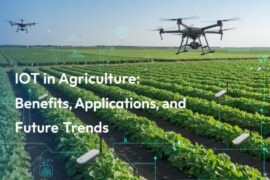
In particular, one of the most impactful applications of monitoring is IoT in agriculture. In particular, farmers and agribusinesses are embracing smart farming in order to meet global food demand more sustainably.Select 70 more words to run Humanizer.
Key Benefits of IoT in Agriculture
- Soil moisture monitoring, for example, for efficient irrigationWeather tracking to prevent crop damage
- Livestock health monitoring
- Reduced water, fertilizer, and pesticide usage
- With IoT monitoring, agriculture becomes more precise, data-driven, and environmentally responsible.
- In 2026, smart farms powered by IoT are not a luxury rather they are a necessity.
IoT Gateway: The Unsung Hero of IoT Monitoring
The IoT Gateway plays a critical role in ensuring reliable and secure IoT systems. In fact, it acts as the bridge between connected devices and the cloud, enabling stable communication and data protection.
Why IoT Gateways Matter
- Additionally, secure data transmission
- Local data processing (edge computing)
- Reduced network latency
- Furthermore, integration with legacy systems
Without a robust IoT Gateway, even the most advanced IoT devices cannot deliver consistent performance. Therefore, the gateway becomes essential for maintaining stable communication and reliable data transfer.
Security and Privacy in IoT Monitoring
As IoT adoption grows, security becomes a top concern. Therefore, in 2026, businesses must prioritize secure IoT architectures
Best practices include:
- Encrypted communication
- With secure device authentication
- Regular firmware updates
- Network segmentation
Modern IoT platforms integrate security at every level, from device to cloud. As a result, data remains protected throughout its entire journey.Modern IoT platforms integrate security at every level, from device to cloud. As a result, data remains protected throughout its entire journey.
Modern IoT platforms integrate security at every level, from device to cloud. Data remains protected throughout its entire journey.Modern IoT platforms integrate security at every level, from device to cloud. As a result, data remains protected throughout its entire journey.
The Future of IoT Monitoring Beyond 2026
IoT monitoring will continue evolving with AI, machine learning, and edge computing. Future systems will not only monitor but also predict, adapt, and self-optimize.
We will see:
- Autonomous factories
- AI-powered predictive analytics
- Hyper-connected supply chains
- Smarter cities and infrastructure
Businesses that adopt IoT monitoring today are, therefore, positioning themselves as leaders of tomorrow.
Final Thoughts
Today, IoT monitoring is no longer a trend; instead, it is a foundational technology shaping the future of business. Whether through industrial IoT, industrial automation in IoT, IoT device monitoring, IoT Gateway solutions, or IoT in Agriculture, the benefits are clear: efficiency, intelligence, and resilience.
In 2026, businesses that fail to embrace IoT risk falling behind as faster, smarter, and more agile competitors continue to evolve. The question is no longer why your business needs IoT monitoring but how soon you can implement it.