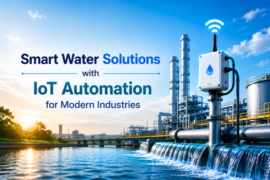
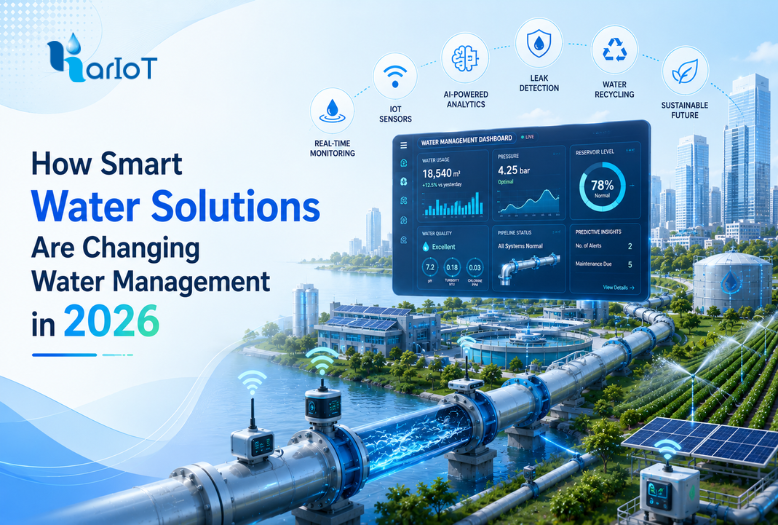
Water conservation has become one of the biggest global priorities today. Across cities, industries, and communities, the demand for clean and reliable water continues to grow. At the same time, climate change, population growth, aging infrastructure, and water waste are creating serious challenges. Smart Water Solutions are helping governments, utilities, and industries move from traditional water management to a smarter and more efficient approach. By combining connected devices, real-time data, and automation, these technologies make it possible to monitor, protect, and conserve water like never before.
Although water covers most of the Earth, only a small portion is available as usable freshwater. Even more concerning, millions of liters of treated water are lost every day because of leaks, outdated systems, and inefficient operations.However, technology is creating new opportunities to manage water more effectively.In this blog, you will learn how modern water technologies are changing conservation efforts and why 2026 is becoming an important year for smart water management system.
Why Water Conservation Needs a Smarter Approach
Traditional water systems were designed mainly to supply water, but not to monitor usage, detect problems, or improve efficiency. For many years, water operators relied on manual inspections, scheduled maintenance, and delayed reporting to manage water infrastructure.
As a result, leaks often went unnoticed, maintenance became reactive, and large amounts of treated water were lost before reaching users. Today, this traditional approach is no longer enough.
Population growth, increasing water demand, climate challenges, and aging infrastructure are putting more pressure on water systems than ever before. Organizations now need smarter methods to manage water resources efficiently and reduce unnecessary waste. This is exactly where Smart Water Solutions are creating a major impact.
These technologies provide continuous visibility into water networks and allow operators to make faster and more informed decisions. Instead of waiting for problems to occur, teams can identify risks early and take action immediately.
Additional benefits include:
- Early leak detection to reduce water loss
- Real-time monitoring of water usage and system performance
- Faster maintenance and reduced repair costs
- Better control over water distribution
- Improved water quality monitoring
- Reduced operational downtime
- Increased efficiency across the entire network
- Better planning using accurate data and insights
Moreover, smarter water systems help organizations shift from reactive management to proactive operations. This means fewer unexpected failures, improved service reliability, and stronger long-term sustainability.
By using modern technology, water providers can protect valuable resources while delivering more reliable and efficient services to communities and industries.
Understanding Modern Smart Water Technologies
Modern water networks are evolving beyond traditional infrastructure and becoming more intelligent and connected. Instead of simply supplying water, today’s systems focus on monitoring performance, reducing waste, and improving efficiency through digital technologies.
By combining physical infrastructure with smart technologies, organizations can therefore manage water resources more efficiently and sustainably.
How Modern Water Networks Work
Modern water systems use connected devices and digital platforms to collect and process information continuously.
Sensors are installed across pipelines, storage tanks, pumps, valves, and treatment facilities to monitor important conditions such as:
- Water flow
- Pressure levels
- Water quality
- Equipment performance
- Usage patterns
This information is collected and analyzed instantly, helping operators make faster and smarter decisions.
The Role of IoT in Water Management
One of the most important developments driving this transformation is smart water management using iot.
IoT technology connects multiple devices into one intelligent ecosystem where information flows automatically between sensors, monitoring platforms, and operational teams.
Unlike traditional systems that rely on manual inspections and delayed reports, IoT-enabled systems provide real-time updates that improve visibility across the entire network.
Benefits of Real-Time Data Collection
Continuous access to operational data creates several advantages for water management teams.
These include:
- Faster leak detection
- Improved distribution efficiency
- Reduced water loss
- Lower maintenance costs
- Better operational planning
- Faster response to system issues
As a result, operators can solve problems earlier and improve overall network performance.
Moving Toward Smarter Water Operations
- Traditional water systems often react after problems occur. However, modern technologies allow organizations to take a proactive approach.
- Instead of waiting for monthly reports or manual inspections, teams receive immediate alerts and insights whenever unusual conditions appear.
- This allows operators to improve reliability, optimize resources, and support long-term water conservation goals.
- By combining connected infrastructure, intelligent monitoring, and real-time decision-making, modern water systems are becoming faster, smarter, and more efficient.
- Additionally, operators no longer need to wait for monthly reports or physical inspections to understand system performance. Instead, they receive real-time updates and alerts that allow quick action whenever unusual conditions appear.
Real-Time Visibility Changes Everything
Water networks often cover large areas and include underground infrastructure that is difficult to inspect.
Because of this, visibility has always been one of the biggest operational challenges. An iot remote monitoring solution solves this issue by allowing operators to monitor entire networks from a centralized platform.
With remote access, teams can:
- Detect leaks quickly
- Track pressure changes
- Monitor water quality
- Reduce unnecessary site visits
- Improve response times
Additionally, remote monitoring lowers operating costs and improves customer satisfaction.
When operators can see problems instantly, they can fix them before service interruptions happen.
Turning Data Into Better Decisions
Collecting information alone is not enough. Organizations also need tools that transform raw data into practical actions.
A smart water management system serves as the central platform where information from connected devices is collected and analyzed.
These systems help operators:
- Identify unusual water usage
- Predict maintenance requirements
- Improve operational planning
- Reduce water loss
- Increase service reliability
Instead of reacting after problems appear, teams can make informed decisions before issues become critical. Therefore, water conservation becomes proactive rather than reactive.
Device Reliability Is the Foundation of Success
Connected water networks rely on hundreds or even thousands of devices working together continuously. These devices collect and share important information that helps operators monitor water flow, pressure, quality, and overall system performance.
However, if even one device stops working, important data may be lost. As a result, operators may miss early signs of leaks, equipment failures, or other issues that could affect the entire network.
That is why IoT device management has become an essential part of modern water systems.
This technology allows organizations to control, update, and maintain connected devices remotely without sending technicians to every location. Instead of manual inspections, operators can manage devices from a centralized platform and respond quickly when problems appear.
At the same time, system administrators can:
- Check connectivity
- Update software
- Manage settings remotely
- Detect failures early
As a result, water systems become more reliable, efficient, and easier to manage. Strong device performance ensures that connected water networks continue operating smoothly while supporting long-term water conservation goals.
The Growing Importance of Smart Water Meters
- Measurement plays an important role in conservation.
- Traditional meters often provide limited information and require manual reading.
- Today, smart water meters offer a more advanced approach.
- These meters collect usage data continuously and send updates automatically.
- This provides several benefits:
For Utilities
- Better demand forecasting
- Accurate billing
- Faster leak detection
For Customers
- Real-time usage tracking
- Greater control over consumption
- Lower water waste
Moreover, users become more aware of their daily habits and can make smarter decisions.
Connecting Infrastructure Through Advanced Gateways
- Modern water networks generate huge amounts of information.
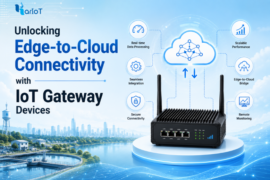
- To move this data efficiently, organizations rely on an iot gateway.
- A gateway acts as the bridge between sensors and cloud platforms.
- It gathers information from multiple devices and securely sends it for processing.
- Without gateways, connected water systems would struggle to manage large-scale communication.
- Because of this, gateways play an important role in creating scalable water infrastructure.
Building Efficient and Sustainable Operations
Water conservation is not simply about reducing usage. It is also about improving the way systems operate. This is where smart water management creates long-term value.
By analyzing real-time information, operators can optimize distribution, reduce pressure losses, and improve maintenance schedules.
Some immediate benefits include:
- Lower operational expenses
- Reduced water leakage
- Improved customer service
- Better sustainability outcomes
Additionally, organizations can meet environmental goals while improving performance.
Industrial Water Conservation Is Becoming a Priority
IIndustries are among the largest consumers of water worldwide. Sectors such as manufacturing, food and beverage production, mining, pharmaceuticals, and energy rely heavily on water for daily operations. From production processes to cooling systems and cleaning activities, water plays an essential role in maintaining productivity and efficiency.
However, increasing water demand, rising operational costs, and stricter environmental regulations are pushing industries to rethink how they manage this valuable resource.To address these challenges, many companies are adopting iot industrial automation to improve water efficiency and reduce unnecessary waste. With automation, industrial water systems can operate more intelligently by adjusting automatically based on real-time conditions instead of depending entirely on manual control.
For example:
- Pumps change speed automatically
- Valves adjust flow levels
- Treatment systems respond instantly
This creates better efficiency while reducing waste.
How Automation Improves Water Usage
Technology is also changing how industries control water-intensive operations.
Through industrial automation in iot, facilities can reduce human intervention and improve accuracy.
Instead of relying on manual adjustments, connected systems continuously optimize operations.
This helps companies:
- Reduce downtime
- Improve production efficiency
- Lower water consumption
- Improve resource planning
Consequently, industrial operations become more sustainable and cost-effective.
Industrial IoT Is Creating Smarter Facilities
Water conservation efforts continue to expand across industrial sectors.
One major driver is industrial iot, which allows machines, sensors, and systems to communicate automatically.
Industrial environments benefit from:
- Continuous data collection
- Faster decision-making
- Reduced operational risk
- Better compliance reporting
As industries continue modernizing, connected water systems will become increasingly common.
Monitoring Devices for Long-Term Performance
Connected infrastructure only delivers value when devices continue operating properly.
That is why iot device monitoring has become an essential part of modern water operations.
Monitoring allows teams to track:
- Device health
- Connectivity status
- Battery performance
- Data consistency
By identifying failures early, organizations avoid larger disruptions later.
As a result, water systems remain dependable.
Continuous Monitoring Drives Better Conservation
Water conservation requires ongoing visibility.
That is where iot monitoring delivers meaningful impact.
Continuous monitoring helps operators understand system behavior and improve performance over time.
Rather than waiting for reports, organizations gain immediate insights that support faster action.
This creates measurable improvements in:
- Water savings
- Maintenance efficiency
- Service quality
- Infrastructure performance
Ultimately, better monitoring leads to smarter conservation.
How Smart Water Innovation Is Changing the Industry
In 2026, the adoption of modern water technology is growing rapidly as organizations focus on water conservation and efficiency. As a result, traditional water management methods are no longer sufficient to meet increasing demand and operational challenges.
Growing Water Demand
Population growth and urban development are placing greater pressure on water resources. Therefore, organizations need smarter solutions to manage and distribute water more efficiently.
Environmental Regulations
Additionally, stricter sustainability and water usage regulations are driving businesses and utilities to adopt advanced monitoring and smarter water management systems. As a result, organizations are improving efficiency and strengthening long-term water sustainability.
Rising Costs
Rising water loss, maintenance, and infrastructure repair costs are accelerating the adoption of smart technologies that reduce expenses through early detection and improved planning.
Better Technology Access
Modern water solutions are now more affordable and easier to implement, making adoption possible for both large and small organizations.
Because of these factors, Smart Water Solutions are becoming essential for sustainable and efficient water management.
Future Trends That Will Shape Water Conservation
The future of water management is becoming smarter, faster, and more connected. As technology continues to improve, Smart water solutions will become more efficient and capable of solving problems before they affect operations. Several innovations are expected to drive this transformation in the coming years.
Artificial Intelligence (AI)
Artificial Intelligence will play a bigger role in improving water management. AI in iot can analyze large amounts of data, predict water usage patterns, identify unusual activity, and support faster decision-making. This will help operators reduce water waste and improve overall efficiency.
Predictive Maintenance
Future water systems are shifting from reactive repairs to predictive maintenance. By using real-time data, organizations can detect equipment issues early, prevent unexpected failures, reduce repair costs, minimize downtime, and improve overall system reliability.
Digital Twins
Digital twin technology creates virtual models of water infrastructure, enabling operators to test changes, simulate conditions, and optimize performance without affecting real-world operations. As a result, it improves planning, efficiency, and system reliability. As a result, it supports better planning, improved efficiency, and safer operations.
Expanded Connectivity
As communication networks continue to expand, advanced water technologies will become more accessible across a wider range of locations, including remote and underserved areas. Consequently, better connectivity will enable real-time monitoring and increase access to efficient water management tools. In turn, this will improve performance and support smarter decision-making.
As these innovations continue to develop, therefore, Smart Water Solutions will become more accessible, helping organizations of all sizes improve efficiency, reduce water loss, and build more sustainable water systems for the future.
Final Thoughts
As communication networks continue to expand, advanced water technologies will become more accessible across a wider range of locations, including remote and underserved areas. Consequently, better connectivity will enable real-time monitoring and increase access to efficient water management tools. Furthermore, these improvements will enhance operational efficiency. In turn, this will improve performance and support smarter, data-driven decision-making.
The opportunity is clear, the technology is available, and the benefits are continuing to grow.The future of conservation will be driven by innovation and Smart Water Solutions will continue leading that transformation.
FAQs
1. What are Smart Water Solutions?
Smart water technologies use sensors, connected devices, data analytics, and automation to improve how water is monitored and managed. As a result, organizations can reduce water waste, improve efficiency, and make faster decisions based on real-time information.
2. How does IoT help conserve water?
IoT helps conserve water by enabling real-time monitoring, leak detection, and usage tracking. In addition, it allows operators to respond quickly to issues, reducing water loss and improving overall system performance.
3. Are smart water systems expensive to implement?
The cost of implementation depends on the size and complexity of the project. However, many organizations recover their investment over time through lower maintenance expenses, reduced water waste, and improved operational efficiency.
4. Can small utilities use smart water technologies?
Yes, smaller utilities can also benefit from smart water technologies. Moreover, many solution providers offer scalable and flexible options that allow organizations to start small and expand gradually based on their needs and budget.
5. Why is water conservation becoming more important in 2026?
Water conservation is becoming more important because of rising water demand, climate challenges, aging infrastructure, and stricter environmental regulations. Therefore, adopting smarter and more efficient water management practices is becoming a priority across the world.