Water is one of the most valuable resources in every home, apartment, commercial building, and industry. However, many people still operate their water pumps manually, which often leads to water overflow, dry running, increased electricity bills, and unnecessary maintenance costs. An automatic water motor on/off system is a smart solution that automatically controls the water pump based on the water level in the tank. As a result, it helps save water, electricity, and time while ensuring a continuous water supply. Today, many homeowners and businesses are choosing this technology because it makes daily water management easier and more efficient.
Whether you own a house, apartment, office, school, hospital, or factory, installing an automatic water motor controller can significantly improve your water management process. Moreover, with modern technologies such as smart water management using iot, users can monitor and control water systems remotely, making water management more intelligent than ever before. In this complete guide, you will learn everything about automatic water motor systems, including how they work, their benefits, components, applications, and why they have become an essential part of modern water management.
What is an Automatic Water Motor On/Off System?
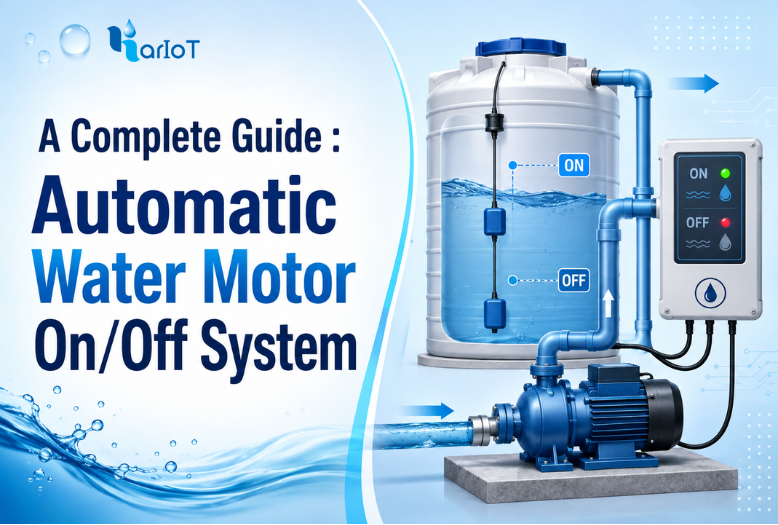
An automatic water motor on/off system is an intelligent device that automatically starts and stops a water pump depending on the water level inside the storage tank. Instead of switching the motor on and off manually every day, the controller performs this task automatically using water level sensors.
For example, when the overhead tank reaches the minimum water level, the controller starts the motor automatically. Similarly, when the tank becomes full, the system immediately switches off the motor. Therefore, there is no risk of overflowing tanks or forgetting to turn off the motor.
Unlike traditional methods, automatic systems provide greater convenience while improving efficiency. Furthermore, they reduce human effort and prevent unnecessary water wastage.
Why Do Homes Need an Automatic Water Motor Controller?
Many households still rely on manual water pump operation. Although this method works, it often creates several problems.
Some of the common issues include:
- Water tank overflow
- Dry running of pumps
- High electricity consumption
- Pump damage due to negligence
- Wastage of water
- Frequent manual monitoring
Fortunately, an automatic water motor on off system eliminates all these issues. It ensures that the motor operates only when necessary, thereby increasing both efficiency and equipment life.
Additionally, homeowners no longer need to remember when to switch the motor on or off, making everyday life much more convenient.
How It Works
The working principle is simple but highly effective. The system continuously monitors the water level using sensors installed inside the water tank.
The basic working process includes:
Step 1: Water Level Detection
Water level sensors detect whether the tank is empty, partially filled, or full.
Step 2: Signal Transmission
The sensors send signals to the controller unit. In advanced systems, these signals may pass through an iot gateway, enabling better communication between devices.
Step 3: Motor Control
If the water level falls below the minimum level, the controller automatically switches ON the pump.
Step 4: Automatic Shutdown
When the tank reaches the preset maximum level, the controller immediately switches OFF the motor. Consequently, there is no overflow, and the motor remains protected from unnecessary operation.
Main Components of an Automatic Water Motor System
Every automatic controller contains several essential components that work together.
1. Water Level Sensors : Sensors monitor the water level continuously and provide accurate information to the controller. Modern iot sensors improve reliability and precision even in challenging environments.
2. Control Unit : This is the brain of the system. It receives signals from the sensors and decides whether to start or stop the pump.
3. Relay Module : The relay acts as an electronic switch that controls the motor based on the controller’s instructions.
4. Power Supply : A stable electrical supply ensures uninterrupted operation of the controller.
5. Protection Circuit : Protection circuits safeguard the motor against voltage fluctuations, overloads, and dry running. Together, these components ensure reliable and safe operation throughout the year.
Types of Automatic Water Motor Controllers
Different types of controllers are available depending on the application.
Float Switch Controller
Uses floating switches inside the tank.
Advantages
- Affordable
- Easy installation
- Suitable for homes
Sensor-Based Controller
Uses electronic sensors instead of mechanical floats.
Benefits include:
- Higher accuracy
- Longer lifespan
- Less maintenance
Digital Water Controller
A digital flow meter can be integrated into advanced systems to monitor water consumption and improve operational efficiency. These systems provide better monitoring capabilities and are suitable for residential as well as commercial buildings.
IoT-Based Controller
Modern controllers are connected to the internet for remote monitoring and control. They support iot remote monitoring solution features that allow users to check water tank status from smartphones or computers. This technology is especially useful for people who travel frequently or manage multiple buildings.
Key Features of an Automatic Water Motor On/Off System
An automatic water motor on/off system is designed to make water management easier, safer, and more convenient. It automatically controls the water motor based on the water level in the tank. This means you do not need to switch the motor on or off manually every time.
Here are some of the key features of an automatic water motor on/off system:
1. Automatic Motor Operation
The system automatically turns the water motor ON when the water level is low and turns it OFF when the tank is full. This saves time and reduces the need for manual operation.
2. Water Level Monitoring
The system continuously checks the water level in the tank. Sensors detect whether the tank has enough water and control the motor accordingly.
3. Overflow Prevention
An automatic system helps prevent the tank from overflowing. Once the water reaches the required level, the motor switches off automatically. This helps reduce water wastage.
4. Dry Run Protection
Dry running can damage a water motor when it operates without enough water. Many automatic systems can detect low water availability and stop the motor to help protect it from damage.
5. Power-Saving Operation
The motor runs only when it is needed. By avoiding unnecessary running time, the system can help reduce electricity consumption and improve overall energy efficiency.
6. Low Maintenance
Automatic water motor systems are generally easy to maintain. Once the sensors and control unit are installed correctly, the system can work automatically with minimal attention.
7. Easy Installation
Many modern automatic water motor controllers are designed for simple installation. Depending on the model, they can be connected to existing water pumps and tanks without major changes.
8. Long Operational Life
By preventing problems such as overflow and dry running, the system can help reduce unnecessary stress on the motor. This may help increase the working life of the water pump.
9. High Accuracy
Water level sensors help the system detect changes in the tank level accurately. This allows the motor to start and stop at the required water levels.
10. Reliable Performance
A good automatic water motor on/off system can provide consistent performance with less manual effort. It is useful for homes, apartments, offices, farms, and other places where regular water pumping is required.
11. Alarm Notifications
Some advanced systems provide alarm alerts when there is a problem, such as low water availability, motor failure, or an unusual water level. These alerts can help users take action quickly.
12. Mobile App Integration
Modern smart water motor controllers may also connect to a mobile app. This allows users to monitor the motor and water level remotely and, in some systems, control the motor using their smartphone.
Overall, an automatic water motor on/off system makes water management simple and convenient. It can help prevent water overflow, protect the motor, reduce unnecessary power usage, and save time. With smart features such as sensors, alarms, and mobile connectivity, it can be a useful solution for modern homes and buildings.
Benefits of Installing an Automatic Water Motor System
Installing an automatic water motor on off system offers numerous advantages for homeowners, apartment complexes, offices, industries, and institutions.
Saves Water :
One of the biggest advantages is water conservation.
Since the motor stops immediately after the tank is full, water overflow is completely prevented.
As a result, thousands of liters of water can be saved every year.
Reduces Electricity Bills :
The pump runs only when required.
Therefore, unnecessary motor operation is eliminated, reducing electricity consumption significantly.
Protects the Water Pump :
Dry running is one of the leading causes of pump damage.
Fortunately, automatic controllers stop the motor before damage occurs, increasing the lifespan of the equipment.
Saves Time :
There is no need to manually monitor the tank throughout the day.
Instead, the controller performs the work automatically.
Improves Convenience :
Users enjoy a continuous water supply without worrying about switching the motor on or off.
Automatic Water Motor Systems in Smart Homes
Modern homes are becoming smarter every year.
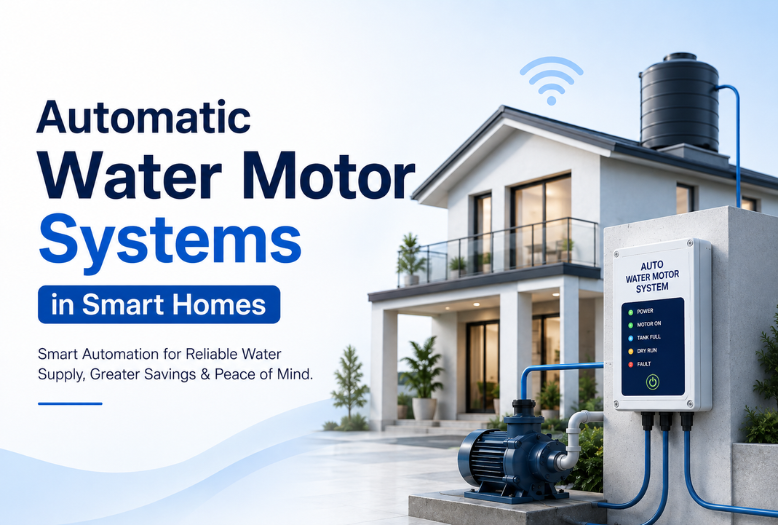
Today, homeowners prefer integrating their water systems into a smart water management system for better monitoring and automation.
With connected devices, users receive real-time updates about tank levels, motor status, and water usage. Additionally, these systems can be managed remotely through mobile applications, making daily operations more convenient and efficient.
Commercial and Industrial Applications
Residential Homes: Automatically controls water pumps to maintain a consistent water supply without manual intervention.
Commercial Buildings: Ensures uninterrupted water availability for offices, shopping malls, and business complexes.
Factories: Supports manufacturing processes, cooling systems, and equipment cleaning by maintaining a reliable water supply.
Educational Institutions: Provides continuous water for schools, colleges, and universities while reducing manual monitoring.
Hospitals: Ensures a dependable water supply for patient care, sanitation, and medical operations.
Hotels: Maintains consistent water availability for guest rooms, kitchens, and other facilities.
Agricultural Fields: Automates water pumping for irrigation, improving efficiency and reducing water wastage.
Apartment Complexes: Automatically manages multiple overhead water tanks, eliminating the need for frequent manual checks.
Improved Productivity: Allows building managers and maintenance staff to focus on other essential tasks instead of monitoring water levels.
Industrial IoT Integration: Industrial IoT connects pumps, controllers, and iot device monitoring into a single intelligent network, enabling smarter and more efficient water management.
Importance of Smart Water Monitoring
Monitoring water usage has become essential due to increasing water shortages across the world. Traditional methods often result in unnecessary water loss because tanks overflow or pumps continue running even after the tank is full. Modern smart water management solutions solve these problems by providing accurate and real-time information about water levels and pump performance.
Furthermore, these systems help users identify unusual water consumption, detect leaks early, and improve overall efficiency. Consequently, homeowners and industries can significantly reduce water wastage while lowering operating costs.
Installation Process
Installing an automatic water motor controller is generally straightforward. However, proper installation ensures reliable performance and long-term durability.
Step 1: Select the Right Controller
Choose a controller based on:
- Tank capacity
- Pump power
- Water source
- Building size
- Required features
Selecting the correct model is the first step toward achieving reliable automation.
Step 2: Install Water Level Sensors
The sensors should be installed at the minimum and maximum water levels inside the overhead tank.
Proper sensor placement is important because incorrect positioning may affect the accuracy of water level detection.
Step 3: Connect the Controller
The controller should be connected to the motor according to the manufacturer’s wiring instructions.
If necessary, seek assistance from a qualified electrician to ensure safe installation.
Step 4: Test the System
After installation, fill and empty the tank to verify that the motor starts and stops automatically.
Testing confirms that the controller is functioning correctly before regular use.
Maintenance Tips
Although automatic controllers require very little maintenance, regular inspections help maximize their lifespan.
Here are some useful maintenance practices:
- Clean the sensors regularly.
- Check wiring connections.
- Inspect the relay for proper operation.
- Protect the controller from moisture.
- Test automatic operation every few months.
- Ensure stable power supply.
By following these simple steps, users can enjoy years of trouble-free performance.
Common Problems and Their Solutions
Even the best systems may occasionally experience minor issues. Fortunately, most problems can be resolved quickly.
Motor Does Not Start
Possible reasons include:
- Power failure
- Loose wiring
- Faulty relay
- Damaged sensor
Checking these components usually resolves the issue.
Motor Does Not Stop
This may happen because:
- Sensors are dirty.
- Sensor wiring is damaged.
- Controller settings need adjustment.
Cleaning or replacing the sensor often solves the problem.
False Water Level Detection
Mineral deposits or dirt on the sensors can affect their accuracy.
Regular cleaning ensures reliable water level detection.
Frequent Motor Switching
Rapid ON/OFF cycling may indicate improper sensor placement or electrical interference.
Repositioning the sensors generally fixes the issue.
Advantages Over Manual Water Pump Operation
Many people still use manual switches to control their water pumps. However, automatic systems offer several clear advantages.
| Manual Operation | Automatic System |
| Requires human monitoring | Fully automatic operation |
| Risk of overflow | Prevents overflow |
| Higher electricity usage | Saves electricity |
| Pump damage due to dry running | Dry run protection |
| Time-consuming | Saves time |
| Higher maintenance | Low maintenance |
Therefore, upgrading to an automatic controller is a practical investment for both residential and commercial properties.
Choosing the Right Automatic Water Motor System
Before purchasing a controller, consider the following factors:
- Quality of water level sensors
- Motor capacity compatibility
- Safety features
- Dry run protection
- Warranty
- Ease of installation
- Brand reputation
- Customer support
- Power consumption
- Expandability for future upgrades
Making an informed decision ensures long-term reliability and better performance.
Why Investing in an Automatic Water Motor System is Worth It
Many people consider an automatic controller as an additional expense. However, it is actually a long-term investment that delivers significant savings over time.
Here are some reasons why investing in an automatic water motor system is a smart decision:
- Prevents water overflow and wastage.
- Reduces electricity consumption.
- Protects the motor from dry running.
- Increases the lifespan of the water pump.
- Minimizes maintenance costs.
- Provides continuous water availability.
- Improves convenience with automatic operation.
- Supports modern smart home solutions.
- Enhances safety by reducing manual electrical operations.
- Offers peace of mind, even when you are away from home.
Although the initial installation cost may vary depending on the features and brand, the long-term savings on water, electricity, and maintenance make it a worthwhile investment.
Conclusion
An automatic water motor on off system is one of the smartest upgrades for any property that depends on regular water storage. It eliminates the need for manual pump operation, prevents water overflow, protects the motor from damage, and reduces electricity consumption.
Whether you are a homeowner, apartment manager, business owner, or industrial operator, installing an automatic controller simplifies water management while improving efficiency and reliability. Moreover, with the latest IoT technologies, these systems are becoming even smarter, offering remote monitoring, real-time alerts, and better control over water resources. As water conservation becomes increasingly important, investing in an automatic water motor on off system is a practical and future-ready choice. It not only saves valuable resources but also provides convenience, safety, and long-term cost savings.
FAQs
1. What is an automatic water motor on/off system?
An automatic water motor on/off system is a controller that automatically starts and stops a water pump based on the water level in the storage tank. It prevents overflow, protects the pump, and reduces manual effort.
2. Can an automatic water motor controller save electricity?
Yes. Since the controller operates the pump only when needed, it avoids unnecessary running time and helps reduce electricity consumption.
3. Is an automatic water motor system suitable for apartments and industries?
Absolutely. These systems are widely used in homes, apartments, commercial buildings, schools, hospitals, hotels, and industries where continuous water supply is essential.
4. Does an automatic water motor controller require frequent maintenance?
No. Most controllers require very little maintenance. Regular cleaning of the sensors and occasional inspection of electrical connections are usually sufficient to ensure reliable performance.
5. Can I upgrade my existing water pump with an automatic controller?
Yes. In most cases, an automatic controller can be installed with an existing water pump, provided it is compatible with the pump’s voltage and capacity.