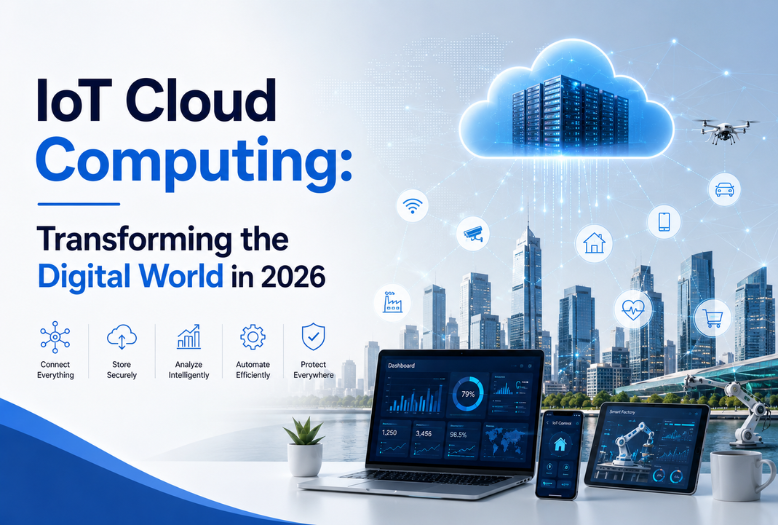
Technology is changing faster than ever. Businesses now expect real-time data, faster decisions, and smarter operations. Because of this shift, connected devices and cloud platforms are becoming the foundation of digital transformation. In 2026, companies across healthcare, manufacturing, logistics, agriculture, retail, and smart cities are investing heavily in IoT solutions, with smart city in iot initiatives driving innovations in traffic management, energy efficiency, public safety, and connected infrastructure. At the center of this transformation stands IoT cloud computing. It combines connected devices with cloud-based storage, analytics, and automation.
Today, billions of devices collect information every second. However, raw data alone cannot help businesses grow. Organizations need scalable cloud infrastructure to process and analyze that information instantly. Therefore, this is where cloud-powered IoT solutions create a major impact.
Moreover, it helps businesses reduce operational costs while improving customer experience. This blog explains how iot cloud computing is transforming the digital world in 2026, the benefits it offers, major industry applications, challenges, future trends, and why businesses should adopt it now.
What is IoT Cloud Computing?
IoT cloud computing refers to the integration of Internet of Things devices with cloud computing platforms. IoT devices collect data through sensors, gateways, and connected systems. Then, cloud platforms process, store, and analyze that data.
For example, a manufacturing company may install sensors on machines to track temperature, vibration, and energy usage. The devices continuously send data to the cloud. After that, cloud analytics identify issues before equipment fails.
This combination creates a connected ecosystem where businesses can access live information from any location. Since the cloud handles large amounts of data, organizations avoid investing heavily in physical infrastructure.
The process usually includes:
- Smart devices and sensors collecting data
- Data transmission through networks
- Cloud storage and processing
- Analytics and reporting dashboards
- Automation and alerts
Because of this workflow, companies gain better visibility into operations. In addition, they improve speed, accuracy, and efficiency.
Why IoT and Cloud Computing Matter in 2026
The digital economy in 2026 depends heavily on automation and connected systems. Businesses want faster operations and smarter decision-making. Therefore, companies are integrating IoT and cloud technologies into daily workflows.
Several factors are driving this demand:
Growth of Connected Devices
The number of connected devices continues to grow worldwide. Smart sensors, industrial equipment, wearable devices, and connected vehicles produce massive amounts of information every day.
Without cloud computing, managing this data becomes difficult. Therefore, cloud platforms provide flexible storage and high-speed processing capabilities.
Demand for Real-Time Insights
Businesses now require live monitoring instead of delayed reports. Managers want immediate alerts about equipment failures, security issues, or performance changes.
Because of this, iot cloud computing helps organizations make faster decisions and improve operational efficiency.
Rise of Automation
Automation reduces manual work and improves productivity. Modern companies use connected systems to automate industrial processes, monitor assets, and manage workflows.
As a result, organizations save time while reducing operational errors.
Remote Access Requirements
Hybrid work and remote operations are becoming standard across industries. As a result, companies now need systems that employees can access securely from anywhere.
Cloud-powered IoT solutions provide remote visibility into operations, devices, and analytics.
How IoT Cloud Computing Works
Understanding the workflow helps businesses see the real value of connected systems.
Data Collection
IoT devices use sensors to collect information such as temperature, pressure, humidity, location, and energy usage.
Data Transmission
The collected information moves through wireless networks, Wi-Fi, cellular networks, or an iot gateway.
Gateways act as communication bridges between devices and cloud platforms.
Cloud Storage and Processing
After transmission, cloud servers store and process the incoming data. Meanwhile, advanced analytics tools identify trends, patterns, and unusual behavior.
Analytics and Automation
Cloud systems convert raw information into useful dashboards and reports. Businesses then automate actions based on specific conditions.
For example, if a machine overheats, the system can instantly send an alert or shut down equipment automatically.
User Access
Managers and employees access reports through mobile apps or web dashboards. Because of this, decision-making becomes faster and more accurate.
Major Benefits of IoT Cloud Computing
Businesses across industries are investing in connected cloud solutions because of the advantages they offer.
1. Improved Operational Efficiency
Connected systems help businesses monitor operations continuously. This reduces manual inspection and improves productivity.
For example, factories can identify machine issues early and prevent expensive downtime.
2. Cost Savings
Cloud infrastructure reduces the need for expensive on-site servers and hardware. In addition, predictive maintenance helps companies avoid major repair costs.
Because of this, businesses improve profitability over time.
3. Real-Time Monitoring
Companies can monitor devices, assets, and systems instantly. This helps teams respond quickly to operational problems.
An iot remote monitoring solution allows businesses to track equipment performance even from remote locations.
4. Better Data Management
Large organizations handle massive amounts of operational data daily. Therefore, cloud computing helps process and organize this information efficiently.
Therefore, decision-makers gain valuable insights without delays.
5. Scalability
Cloud platforms allow businesses to expand without major infrastructure investments. Organizations can add devices, users, and analytics features whenever needed.
6. Enhanced Security
Modern cloud providers offer advanced encryption, authentication, and cybersecurity features. As a result, businesses protect sensitive operational data more effectively.
7. Automation and Smart Operations
Automation improves speed and reduces human errors. As a result, companies now automate energy management, production processes, and maintenance tasks.
This creates smarter business operations and improved customer experiences.
Industry Applications of IoT Cloud Computing
The impact of connected cloud systems reaches almost every industry in 2026.
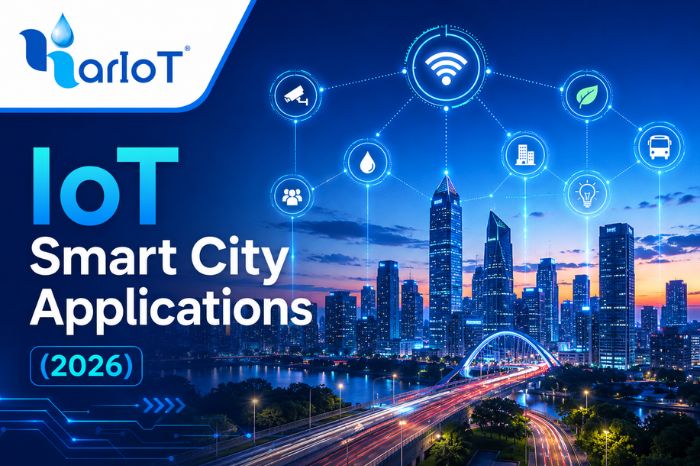
Smart Cities
Governments are investing heavily in connected infrastructure. For example, smart traffic systems, energy monitoring, waste management, and public safety solutions help cities improve urban living.
Many cities also implement smart water management technologies to reduce water waste and monitor distribution networks.
Water Management Systems
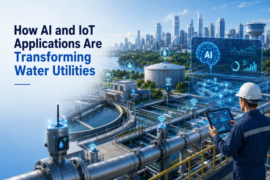
Water utilities face growing pressure to reduce water loss and improve efficiency. As a result, connected systems now help utilities monitor pipelines, tanks, and distribution networks.
A modern smart water management system helps authorities detect leaks, monitor pressure levels, and optimize water distribution.
In addition, smart water management using iot improves visibility into water usage patterns.
Many municipalities also use smart water meters to track consumption accurately and reduce billing errors.
Manufacturing Industry
Factories now use connected machines and sensors to improve production efficiency.
industrial iot enables predictive maintenance, machine monitoring, and automated workflows.
In addition, iot industrial automation helps manufacturers reduce downtime and improve operational safety.
The growth of industrial automation in iot is also improving quality control and energy efficiency in production environments.
Healthcare Sector
Hospitals and healthcare providers use connected devices to monitor patients remotely.
Wearable devices track health metrics and send live data to medical professionals. Therefore, doctors can respond quickly during emergencies.
Connected healthcare systems also improve patient management and reduce operational costs.
Logistics and Transportation
Fleet operators use connected sensors to track vehicle locations, fuel consumption, and driver behavior. In addition, these technologies help improve efficiency and safety.
Real-time analytics improve route planning and delivery performance.
Businesses also use cloud-powered tracking systems to improve inventory visibility.
Agriculture
Modern farms use connected sensors to monitor soil conditions, irrigation systems, and weather data.
Farmers make better decisions because they receive accurate insights in real time.
This improves crop yield while reducing water and fertilizer usage.
Retail Industry
Retailers use connected devices to improve customer experiences and inventory management. Smart shelves, automated billing systems, and connected supply chains help businesses operate more efficiently.
As a result, retailers reduce operational costs and improve customer satisfaction.
Role of AI in IoT Cloud Computing
Artificial intelligence is becoming a major part of connected cloud ecosystems, especially through the growing role of AI in IoT. AI systems analyze large volumes of IoT data and automatically identify patterns, helping businesses predict failures, understand customer behavior, and reduce operational risks.
For example:
- Factories predict machine failures before breakdowns occur
- Retailers analyze customer buying behavior
- Logistics companies optimize delivery routes
- Smart cities improve traffic management
AI-driven analytics also improve automation and decision-making.
In 2026, AI and IoT together create more intelligent digital ecosystems.
Importance of IoT Device Management
As businesses deploy thousands of connected devices, managing them becomes critical.
Effective iot device management helps organizations monitor device performance, update firmware, and maintain security.
Without proper management, businesses face operational risks and cybersecurity threats.
Companies also rely on iot device monitoring to track the health and performance of connected systems.
Similarly, iot monitoring solutions provide live visibility into network activity and device behavior.
Because of this, businesses improve reliability and reduce downtime.
Challenges in IoT Cloud Computing
Although connected cloud systems offer many advantages, businesses still face several challenges.
Data Security Concerns
Cybersecurity remains one of the biggest concerns in connected environments.
Hackers may target connected devices and cloud networks. Therefore, businesses must invest in strong security frameworks.
Data Privacy Regulations
Organizations handling customer or operational data must follow privacy regulations.
Compliance becomes important, especially in healthcare, finance, and government sectors.
Connectivity Issues
Some remote areas still experience unstable internet connectivity.
As a result, businesses may face delays in real-time monitoring and analytics.
Integration Complexity
Many organizations use legacy systems that are difficult to integrate with modern IoT platforms.
Therefore, businesses require experienced technology partners for successful implementation.
High Initial Investment
Although long-term savings are significant, initial setup costs may be high for some businesses.
However, cloud-based subscription models are reducing this barrier.
Future Trends in IoT Cloud Computing
The future of connected cloud ecosystems looks highly promising.
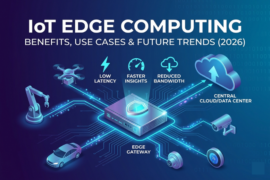
Edge Computing Growth
Edge computing processes data closer to devices instead of relying entirely on cloud servers.
This reduces latency and improves response times.
5G Connectivity
5G networks improve communication speed and reliability.
As a result, connected devices can transmit large amounts of data instantly.
Digital Twins
Businesses are creating digital copies of physical assets to simulate performance and predict failures. Consequently, companies can improve maintenance planning and reduce operational downtime.
Digital twins improve operational planning and Connected technologies help organizations reduce carbon emissions and resource wastage. As a result, organizations can achieve greater sustainability and environmental efficiency. maintenance.
Sustainable Technology Solutions
Companies now focus on energy-efficient systems and sustainable infrastructure.
Connected technologies help organizations reduce carbon emissions and resource wastage.
Increased Automation
Automation will continue expanding across industries.
Businesses will rely more on intelligent systems for operational efficiency and decision-making. Therefore, organizations can respond faster to challenges and improve overall productivity.
Why Businesses Should Adopt IoT Cloud Solutions Now
Companies that delay digital transformation may struggle to remain competitive.
Modern consumers expect faster services, better experiences, and reliable operations. Therefore, organizations must adopt technologies that improve efficiency and innovation.
Cloud-powered IoT systems help businesses:
- Improve productivity
- Reduce operational costs
- Enhance customer experience
- Increase data visibility
- Strengthen automation
- Support remote operations
- Improve decision-making
Businesses that invest early also gain a competitive advantage in rapidly changing markets.
Choosing the Right IoT Development Partner
Successful implementation depends heavily on choosing the right technology partner.
Businesses should look for companies with:
- Experience in cloud and IoT solutions
- Strong cybersecurity expertise
- Industry-specific knowledge
- Scalable development capabilities
- Proven deployment experience
- Reliable support services
An experienced development partner can design secure, scalable, and future-ready IoT ecosystems.
Conclusion
The digital world in 2026 depends heavily on connected technologies and cloud infrastructure. Businesses across industries now rely on real-time insights, automation, and remote monitoring to improve operations. Because of this shift, iot cloud computing has become one of the most important technologies driving digital transformation.
From smart cities and healthcare to manufacturing and logistics, connected cloud ecosystems are improving efficiency, reducing operational costs, and enabling smarter decision-making. Furthermore, these technologies are driving innovation across multiple industries. Organizations that adopt these technologies early will gain stronger market positions and better operational performance. The future belongs to organizations that embrace connectivity, automation, and cloud-powered intelligence. In 2026 and beyond, iot cloud computing will continue transforming how the world operates, communicates, and grows.
FAQ’s
1. What is IoT cloud computing?
IoT cloud computing is the combination of IoT devices and cloud platforms. IoT devices collect data through sensors, while cloud systems store, process, and analyze that data in real time. This helps businesses improve automation, monitoring, and decision-making.
2. How does IoT cloud computing help businesses?
IoT cloud computing helps businesses improve efficiency, reduce downtime, lower operational costs, and monitor systems remotely. It also supports automation, predictive maintenance, and real-time analytics across industries.
3. Which industries use IoT cloud solutions the most?
Industries such as manufacturing, healthcare, logistics, agriculture, retail, and smart cities widely use IoT cloud solutions. These industries rely on connected devices for monitoring, automation, and operational improvements.
4. What are the main benefits of industrial IoT?
Industrial IoT improves machine monitoring, predictive maintenance, production efficiency, and workplace safety. It also helps manufacturers reduce energy consumption and improve overall operational performance.
5. Is IoT cloud computing secure?
Yes, modern IoT cloud platforms use advanced security features such as encryption, authentication, and real-time threat monitoring. However, businesses must follow strong cybersecurity practices to protect connected devices and sensitive data.
6. What is the future of IoT cloud computing in 2026?
In 2026, IoT cloud computing will continue growing with AI, edge computing, and 5G connectivity.Businesses will use smarter automation, real-time analytics, and connected ecosystems to improve productivity and customer experience. In addition, these technologies will help organizations make faster and more informed decisions.